Feeding the Soil: How Manure Nourishes Kodagu Coffee Plants
The finest coffee in the world is not made in a factory. It is made in the soil. Long before a cherry ripens on the branch, long before a picker lifts their basket, the story of flavour is written beneath the surface of the earth. At Pulpoffe, we believe that nourishing the soil is the most important act of farming, and manure is at the very heart of that belief.
Why Coffee Plants Demand So Much from the Soil
Coffee is a demanding crop. A mature coffee plant produces thousands of cherries each season, and each cherry requires a precise combination of nutrients to develop its full flavour potential. The highland estates of Kodagu, at elevations between 900 and 1,400 metres, have rich red laterite soils that hold moisture well, but without regular feeding, even the best soil becomes depleted over time. Organic manure restores what repeated harvests remove and builds the long term structure of the earth beneath the plants.
Unlike synthetic fertilisers, which flood the plant with a single nutrient burst, well composted farm yard manure releases nutrients slowly and steadily over months. This slow release mirrors the natural pace of the coffee plant's growth cycle and supports a more balanced, complex flavour development in the bean.
The Nutrients Every Coffee Plant Needs
Coffee plants require a broad spectrum of nutrients to thrive. These fall into three categories: macronutrients that the plant consumes in large quantities, secondary nutrients that support cellular health, and micronutrients that act as catalysts for biological processes within the plant.
Nitrogen (N) is the most critical macronutrient for coffee. It drives vegetative growth, the development of leaves, stems, and new shoots that will carry next season's crop. A nitrogen deficiency shows up quickly as pale, yellowing leaves and stunted new growth. Farm yard manure, particularly cattle dung compost, is one of the richest sources of slow release nitrogen available.
Phosphorus (P) governs root development and flowering. Strong, deep roots allow the coffee plant to access water and nutrients from deeper soil layers during the dry months, while adequate phosphorus during the flowering stage directly influences how many cherries a plant will set. Without enough phosphorus, flower drop increases and yields fall.
Potassium (K) is sometimes called the quality nutrient for coffee. It regulates water movement within the plant, strengthens cell walls against disease, and plays a direct role in how sugars and acids accumulate in the developing cherry. High potassium availability during cherry development is one reason Kodagu highland coffees tend to have such clean, bright flavour profiles.
Beyond these three, coffee plants also rely on Calcium for cell wall strength and root tip health, Magnesium as the central atom in the chlorophyll molecule (essential for photosynthesis and that deep green leaf colour), and Sulphur for protein synthesis and enzyme activity.
At the micronutrient level, Zinc supports shoot development and auxin production, Boron is critical for successful pollination and fruit set, Iron enables chlorophyll formation, and Manganese activates key enzymes involved in the plant's metabolic processes. A deficiency in any of these, even in tiny quantities, can compromise both yield and cup quality in ways that are difficult to reverse mid season.
How Manure Delivers These Nutrients
Well aged farm yard manure, composted for a minimum of three to four months, contains a broad spread of all the above nutrients in organic form. As soil microorganisms break down the organic matter, nutrients are released in plant available forms gradually over six to nine months. This extended release period means a single well timed manure application at the beginning of the season can sustain the plant through its most demanding growth stages without the risk of nutrient burn or leaching into waterways.
On Kodagu estates, the primary source of manure is cattle dung from the farm's own herd or from neighbouring farms, often supplemented with dried coffee pulp compost, the fruit residue from cherry processing, which is exceptionally high in potassium and organic carbon. This circular approach, where the waste product of one part of the farm feeds the soil for the next harvest, is both economically sound and deeply sustainable.
The Timing Guide for Kodagu Estates
Knowing what to apply is only half the equation. Knowing when to apply it is equally critical. The Kodagu calendar has four distinct periods that drive the manure schedule on well managed estates.
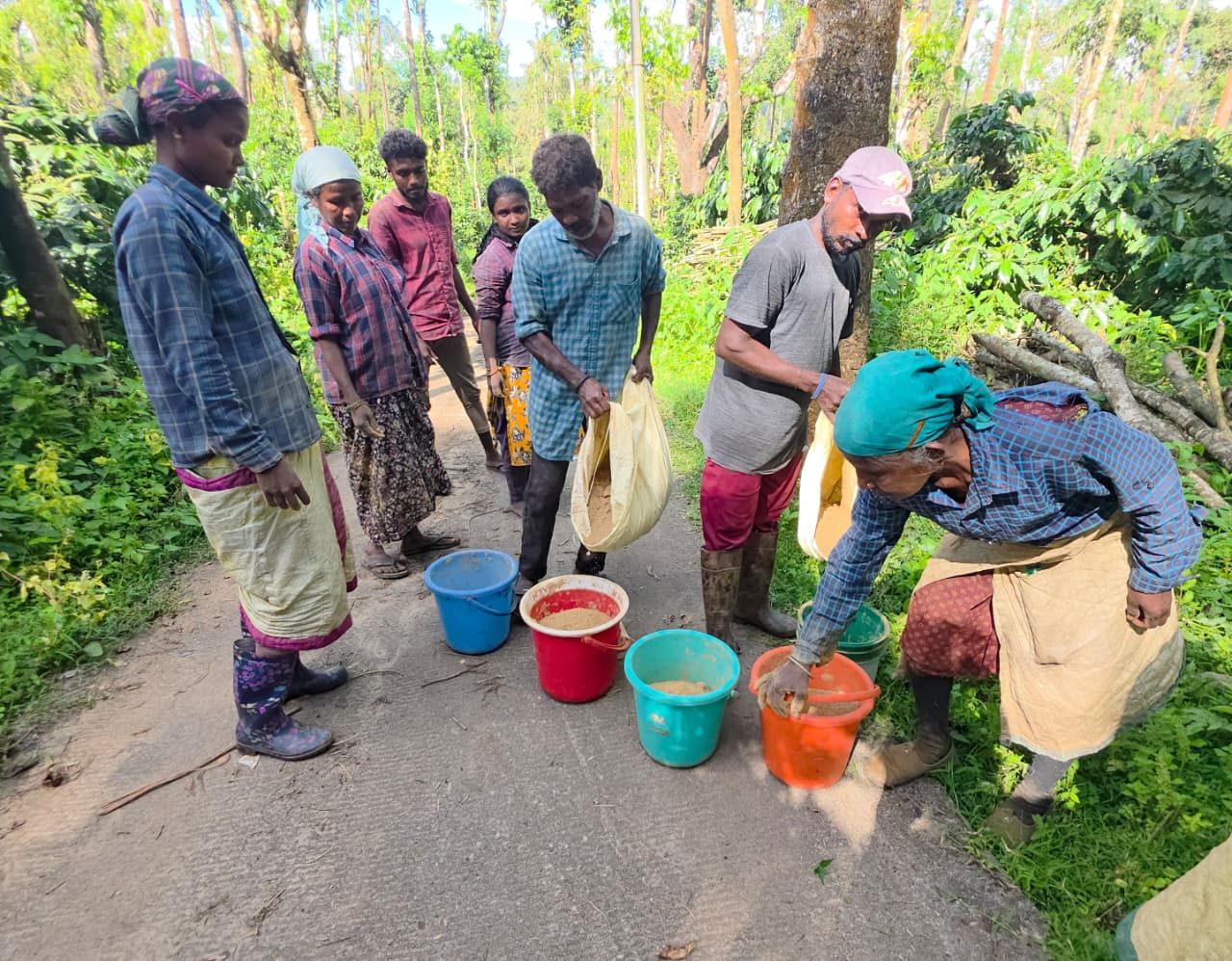
Pre-blossom (February to March): This is the most important manure application of the year. Applied six to eight weeks before the expected blossom, it ensures that phosphorus and potassium are fully available in the root zone during flowering. The application rate is typically 15 to 25 kilograms of composted farm yard manure per plant, worked lightly into the soil around the drip circle without disturbing the fine feeder roots.
Post-blossom and early berry development (May to June): A lighter top dressing of compost or well composted coffee pulp at this stage supports the rapid cell division happening inside the young cherry. Nitrogen availability is critical here to support the flush of new leaves that follow the blossom and will sustain photosynthesis through the monsoon.
Mid-monsoon (July to August): No manure application is made during the height of the monsoon. Heavy rainfall would leach soluble nutrients away from the root zone before the plant can absorb them, wasting both the investment and risking waterway contamination. This is the period for monitoring plant health and addressing any visible deficiency symptoms with targeted foliar feeds if required.
Post-harvest recuperation (January to February): After the intense effort of cherry production and harvest, the plant needs to rebuild its reserves. A moderate application of organic compost at this stage, timed just as the dry season begins, replenishes the soil's organic matter content and sets up the biological activity needed for the pre-blossom application two months later.
The soil is the memory of the farm. What you give to it today, the plant will return to you in the cup two years from now.
Watch: Manure Application on the Estate
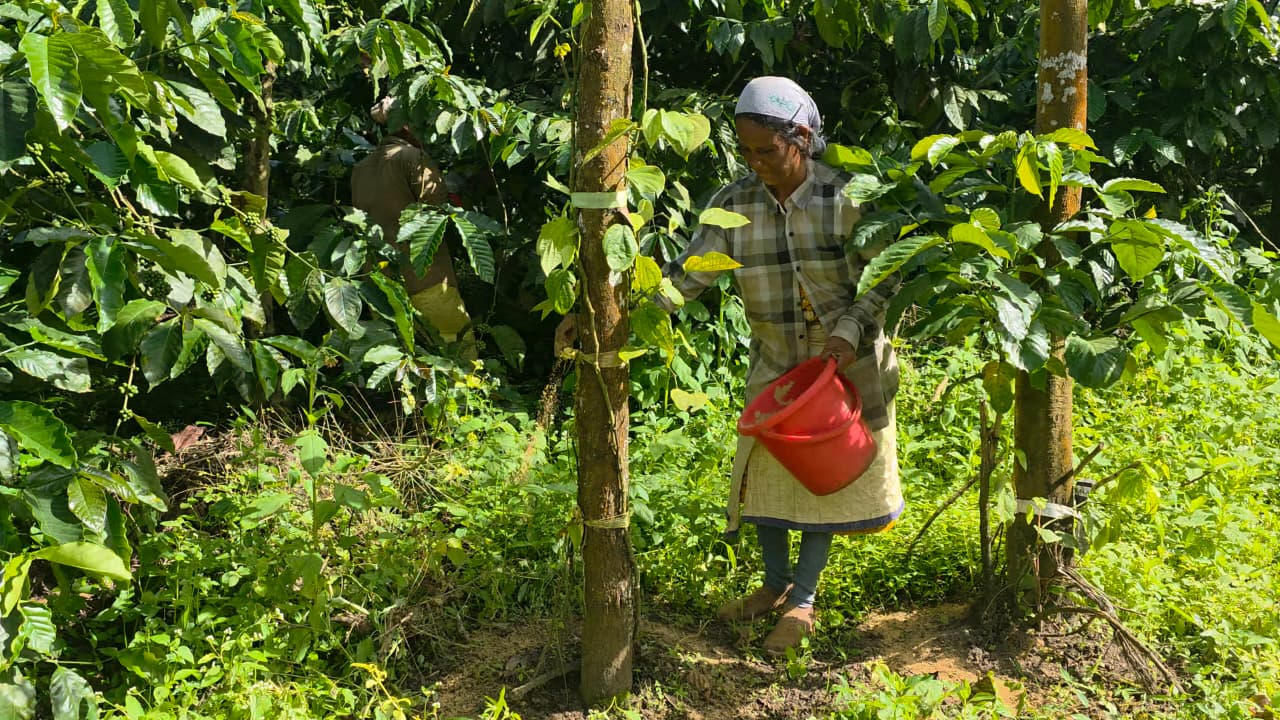
The following footage, captured on one of our partner estates in Kodagu, shows the manure application process during the pre-blossom season. Notice how workers place the compost within the drip circle of the plant rather than against the trunk, protecting the root collar while maximising nutrient delivery to the fine feeder roots that do the real work of absorption.
Estate workers applying composted manure around mature coffee plants during the pre-blossom season in Kodagu
The Long View: Building Soil Health Over Decades
The estates that produce Pulpoffe coffee have been farmed for generations, and their soil health reflects that long history of thoughtful management. Organic matter content in a well managed Kodagu estate soil can reach 4 to 6 percent, compared to 1 to 2 percent on degraded or chemically dependent farmland. This higher organic content supports a vastly richer community of soil microorganisms including mycorrhizal fungi that extend the plant's effective root reach by orders of magnitude.
These fungi form a symbiotic relationship with the coffee root system, trading plant sugars for water and mineral nutrients from deep in the soil profile. A thriving fungal network is one of the most valuable assets a coffee farmer can cultivate, and it is built not in weeks but over years of consistent organic matter inputs. Every kilogram of manure applied today is an investment in that invisible network beneath the soil.
At Pulpoffe, we work with our estate partners to document and refine their manure schedules each season, adjusting rates and timing based on soil test results, rainfall patterns, and yield data from the previous year. It is not glamorous work. It rarely features in the marketing of premium coffee brands. But it is the foundation upon which every extraordinary cup of Pulpoffe is built.
When you taste the clarity and brightness in a Pulpoffe Gold or the deep fullness of a Diamond Freeze Dried, you are tasting the soil of Kodagu. You are tasting decisions made months and years before harvest. You are tasting the manure.