Harvest Season in Kodagu: When the Hills Come Alive
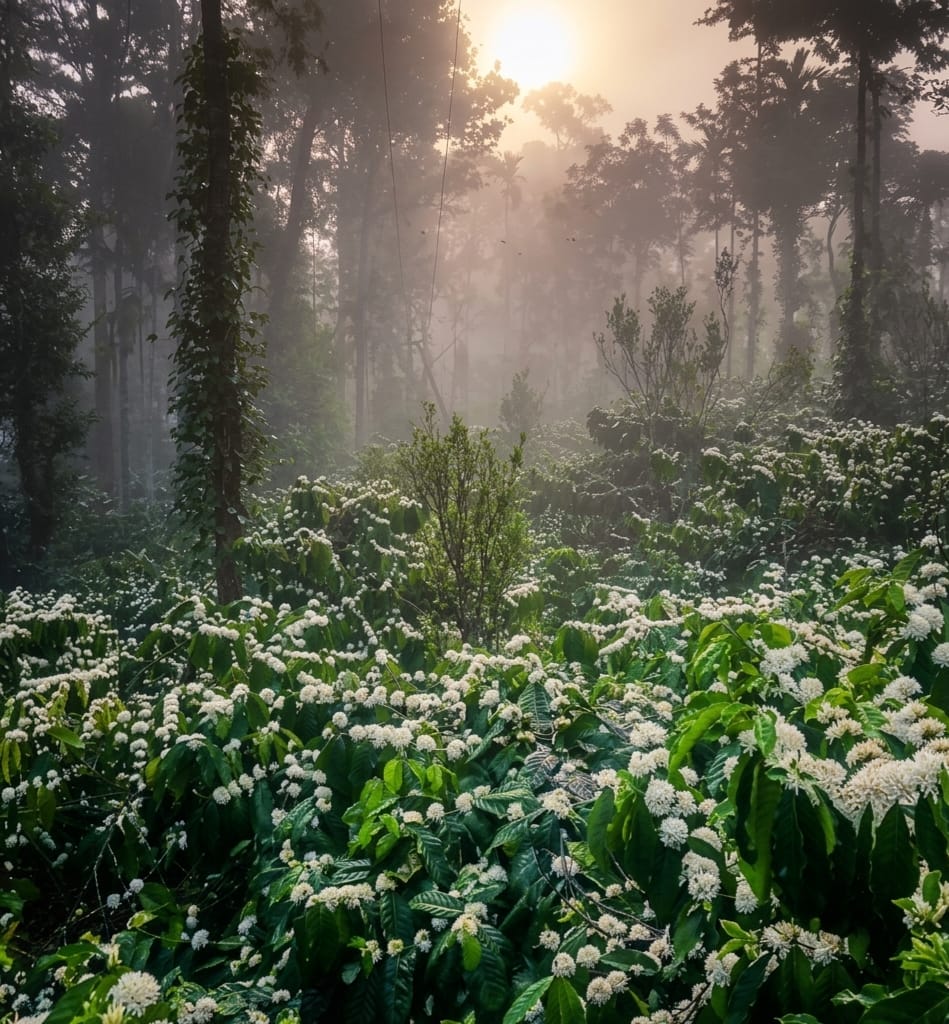
Between October and January, something extraordinary happens in the Western Ghats. The mist covered hills of Kodagu, already one of the most beautiful landscapes in southern India, transform into an ocean of colour. The coffee cherries, which have been slowly developing through the long monsoon months, begin to ripen into deep, vivid shades of red and crimson. This is the harvest season, and it is when Pulpoffe coffee truly begins.
A Landscape in Full Bloom
At an altitude of 900 to 1,400 metres, the Kodagu estates greet each harvest morning with a thick blanket of mist rolling in from the Arabian Sea. The air is cool and carries the earthy, sweet scent of ripe cherries mingling with the fragrance of the silver oak trees that shade the coffee plants below. Estate workers, many from families who have harvested these same slopes for generations, begin their day before dawn, preparing their wicker baskets and moving silently into the rows.
This landscape does not simply provide a beautiful backdrop. The elevation, the mist, the temperature swings between day and night, all of these elements slow the maturation of the coffee cherry, allowing sugars and complex acids to develop over months rather than weeks. The result is a bean with layers of flavour that no lowland farm can replicate.
The Art of Selective Picking
Not every cherry on a branch ripens at the same moment. A single coffee plant can carry cherries at three different stages of ripeness simultaneously, and only those that have reached deep red are ready for harvest. This is why Pulpoffe insists on selective hand picking rather than the strip or mechanical methods used by large scale producers.
Each picker walks the rows multiple times across the harvest season, returning to the same plant again and again to collect only what is perfectly ripe. A skilled worker can identify the right cherry by colour, firmness, and even by the ease with which it detaches from the stem. It is a craft that takes years to develop, and it is the foundation of everything Pulpoffe stands for.
"The cherry must let go willingly. If you have to pull, it is not ready." This is the wisdom passed down through generations of Kodagu estate workers and it is the standard every Pulpoffe harvest upholds.
Sorting and the Promise of Quality
Once picked, the cherries are brought to the estate processing station where they undergo immediate sorting. Overripe, underripe, and damaged cherries are separated by hand and by flotation, a process where cherries are placed in water and the defective ones float while the dense, perfect cherries sink. Only the sunken ones move forward.
This sorting step is the silent guardian of the Pulpoffe flavour standard. A single underripe cherry in a batch can introduce grassy or harsh notes that undermine the entire cup. A single overripe cherry can bring fermented off flavours. The patience required at this stage is not glamorous, but it is irreplaceable.
From Hillside to Processing
After sorting, the cherries move to wet processing within hours of picking. The outer skin and pulp are removed using a pulping machine, and the beans enter a fermentation tank filled with water. Here, they rest for 36 to 48 hours as naturally occurring enzymes break down the sticky mucilage layer that clings to the bean. This fermentation step, carefully monitored for temperature and duration, is what gives Kodagu washed coffees their characteristic clean brightness and fruit forward clarity.
After fermentation, the beans are washed thoroughly with fresh water and moved to raised drying beds where the Kodagu sun and cool highland air complete the process over 10 to 15 days. Workers rake and turn the beans regularly to ensure even drying, protecting them from rain or moisture that could introduce mould or uneven flavour development.
The Connection Between Harvest and Your Cup
Every decision made during harvest season carries forward into the instant coffee you brew each morning. The cherries picked in November become the beans roasted in February, the powder packed in March, and the cup you hold in April. The chain of care, from the picker's careful hand to your kettle's steam, is unbroken.
At Pulpoffe, we believe the harvest season is not simply an agricultural event. It is the annual renewal of a promise, a commitment to sourcing only what the Kodagu landscape produces at its very best. When you open a Pulpoffe pouch, you are opening a chapter of that story. We hope every cup reminds you of the hills, the mist, and the hands that made it possible.